

The modern world is a highly technological place, and because of this, encouraging curiosity, creativity, and problem-solving in young children is important. One of the most effective ways to nurture your child’s developing abilities is through STEM toys. These items blend play with learning that leans toward science, technology, engineering, and mathematics. Providing young children with engaging and educational toys can help them improve their critical thinking skills, motor skills, and ability to innovate.
What Are STEM Toys?
STEM toys are educational playthings designed to encourage children to explore and experiment. They use fundamental concepts in science, tech, engineering, and math, which is where the term “STEM” comes from. Unlike traditional toys that primarily entertain, STEM toys promote learning through problem-solving and having hands-on experiences. They introduce children to concepts like building structures, coding basics, physics principles, and even robotics. However, STEM aims to do so in a way that feels fun and exciting.
Why STEM Toys Matter
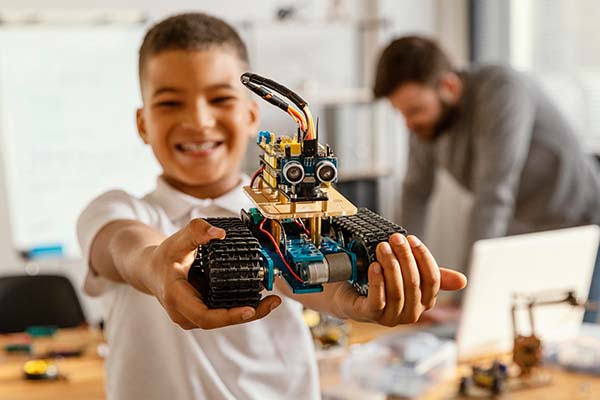
The first years of a child’s life are critical for cognitive development, and STEM toys for kids help lay the foundation for skills they’ll use in the future. These toys allow children to experiment, take their time, and find unique workarounds for everyday challenges.
By introducing children to these concepts early, parents can help cultivate a lifelong interest in learning and discovery. Additionally, STEM toys enhance patience and resilience, which shows kids that failure is just another step in the learning process.
Choosing the Best STEM Toys
When choosing the best STEM toys, parents and caregivers should consider:
- Age Suitability: Choose toys that align with your child’s developmental stage.
- Hands-On Experiences: Look for toys that call for active participation, like building kits and coding sets.
- Educational Value: Opt for toys that reinforce STEM concepts in a meaningful way.
- Build Quality: Choose toys that are built to last so that broken pieces don’t interfere with your child’s play.
Toys that encourage open-ended play and allow children to create, build, and explore tend to have the most lasting impact.
STEM Toys for Different Age Groups

As children grow, their ability to understand and interact with STEM concepts develops. Choosing age-appropriate toys ensures they remain engaged and challenged without becoming frustrated. Below is a breakdown of STEM toy options suited for different developmental stages.
For Toddlers (Ages 1-3)
For the youngest learners, STEM toys should focus on basic problem-solving, hand-eye coordination, and sensory exploration. Simple STEM toys for toddlers include:
- Shape sorters and stacking toys
- Magnetic building blocks
- Simple cause-and-effect toys (ex: gears and pulleys)
These toys help develop fine motor skills, spatial reasoning, and foundational logic skills.
When choosing STEM toys for very young children, take special care to choose products without small pieces, and supervise them during playtime. Additionally, selecting toys with bright colors and different textures can enhance sensory development.
For 5-Year-Olds (Ages 4-6)
At this stage, children are ready for more complex toys that challenge their thinking skills and develop their creativity. STEM toys for 5-year-olds include:
- Beginner robotics kits
- Building sets like LEGO or magnetic tiles
- Simple coding toys with screen-free programming
- Science kits for basic experiments
These toys encourage kids to explore and experiment through hands-on learning, which helps make STEM subjects both engaging and accessible. Encouraging children to explain their thought processes while playing can further develop their communication and reasoning skills.
The Value of STEM Building Toys
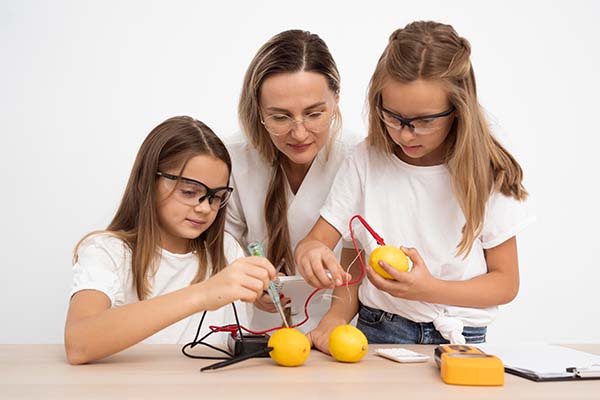
One of the best ways to introduce engineering and math concepts to young children is through STEM building toys. Construction sets, marble tracks, and magnetic tiles allow children to experiment with design, balance, and structural integrity. These toys challenge kids to build stable structures, explore the laws of physics, and develop their spatial awareness. Additionally, collaborative building activities can teach teamwork and problem-solving skills. These skills help prepare young people for real-world applications of STEM knowledge.
Encouraging a Love for STEM
In addition to choosing the right toys, parents and caregivers can help encourage their children’s passion for STEM by:
- Participating in Play: Get involved with your child while they explore their toys. For example, you could ask questions to encourage their discoveries.
- Creating Real-World Connections: Show them how STEM concepts apply in everyday life. This could include applying concepts to baking (measuring ingredients) or fixing things around the house.
- Encouraging Experimentation: Allow children to make mistakes and learn from trial and error.
Introducing STEM educational toys into playtime not only makes learning fun but also helps children develop skills for the future. As technology continues to shape our world, giving young minds a strong foundation in STEM will prepare them to be the leaders of tomorrow. Investing in quality STEM toys means parents can provide their children with valuable tools that will guide them toward their full potential.