

Bringing home your newborn is an exciting time for any parent, but also one of uncertainty and confusion. Caring for a newborn child is a big responsibility, and it’s only natural to want to do your child justice, especially in their earliest stages. One such area of uncertainty is toys and play in babies. Many people are unsure of when to start buying toys for their children, what toys are appropriate for what ages, and how to introduce their children to new toys. Fortunately for you, we’ve put together a quick and simple guide to answer all of your questions about newborn play and the best interactive toys to babies
Pay Attention to Developmental Stages
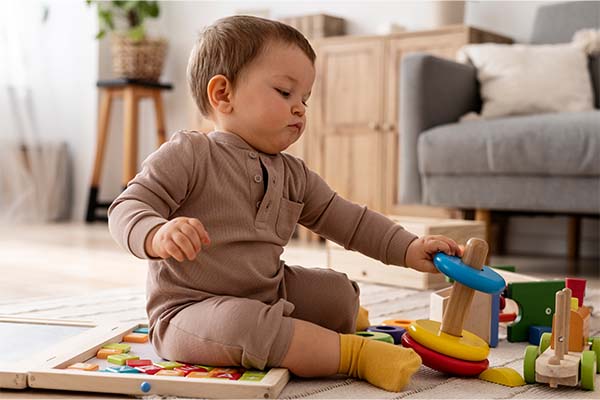
First and foremost, you need to pay attention to your child’s stage of development when choosing and introducing toys to them. Children have different developmental needs depending on their age, and may be interested in different toys as a result. If you want to buy toys that will engage your child and encourage their development, knowing what toys match which age groups is a surefire way to do so.
Do Newborns Need Toys?
If you’ve become a parent within the past few weeks, you may be wondering whether or not you need to purchase some toys for your newborn. Fortunately, you can wait a few months longer before starting the toy shopping process. For the first few months of their lives, newborns spend the vast majority of their time sleeping, and their waking hours are usually consumed by learning about the world around them rather than an interest in any particular item or activity. However, when you start doing tummy time with your child, a set of high-contrast cards is a solid investment with long-term developmental benefits.
When Do Babies Start Playing?
So, if they don’t start from birth, when do babies start playing with toys? Of course, there’s always some slight variation from baby to baby, but most will start to show an interest in toys and play activities around 3-4 months of age.
By that point, most babies have starting grabbing objects they find interesting, and while still short, have developed a long enough attention span to fully engage with those objects. That said, even if your child is interested in playing, it’s still important to introduce toys to them in a way that encourages play activities. Here’s a quick guide.
Use Colorful and Novel Toys
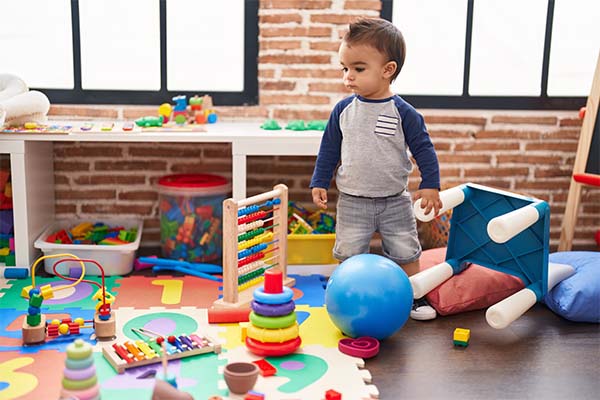
This point goes back to a child’s attention span as we touched on earlier. Because babies tend to have very short attention spans, they’re easily distracted by anything that’s brighter, louder, or more interesting than whatever they happen to be engaging with at the moment. Thus, if you want a toy to catch their attention, it should use attention-grabbing colors like bright red, and present a sort of sensory experience that’s new to them. If you purchase a toy that meets these requirements, your child will most likely drop whatever they’re doing to play with it when it’s introduced.
Encourage Self-Guided Discovery
If we had to describe babies in just a few words, we’d call them surprisingly intelligent and unexpectedly creative. They’re capable of finding all sorts of solutions to problems and unconventional uses for everyday objects. That’s why it’s important to let your child self-guide their play. Rather than show them how to use their toys, simply introduce a new toy and let them figure out what to do with it. This will encourage them to think creatively and independently, and who knows, they may find a use for that toy that not even you expected!
Understand Every Baby Is Different
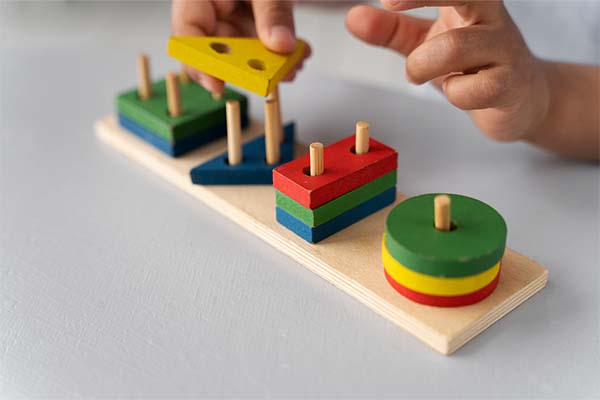
While things like stuffed animals and building blocks are generally popular with babies, it’s important to remember that your baby is an individual. Just like you, they have their own likes, dislikes, and preferences, so there’s no one-size-fits-all approach to finding the perfect toy for them. Rather than building blocks, maybe your child prefers simple puzzles for babies. Rather than stuffed animals, maybe they’d be more interested in a model train or fire truck. While there’s no concrete way to tell what your child will like or dislike, we encourage you to just do a bit of trial and error, then use that information to inform future toy purchases. If you keep track of what keeps your child’s attention, it’ll become much easier to buy the right toys in the future. This ensures that your child will always have toys that are entertaining and developmentally appropriate.
Looking for more great tips, tricks, and products to ensure your baby gets the entertainment and intellectual stimulation they need? Come and visit our site at ToysCentral today!