The Evolution of Children’s Toys and Games in the Digital Era

Digital technology has grown remarkably quickly over the past several decades. It has become a prominent part of our daily lives, from our work to our recreation. Now, even the ways that our children play are being influenced by digital technology and the internet, with countless new options and features at their fingertips. Here’s everything you need to know about modern children’s’ toys, the evolution of gaming, and how new technology is innovating play. 

Adaptive Learning Games

While educators have been trying to make learning-based games work for years now, they’ve always run into the same problem: the learning materials in these games tend to be rigid, and don’t change to fit the student. In more recent years, though, this has begun to change. Educational games can now use AI algorithms to determine the player’s strengths and weaknesses, providing them with a highly entertaining and educational experience customized to their needs.

Ability to Connect to Faraway Friends
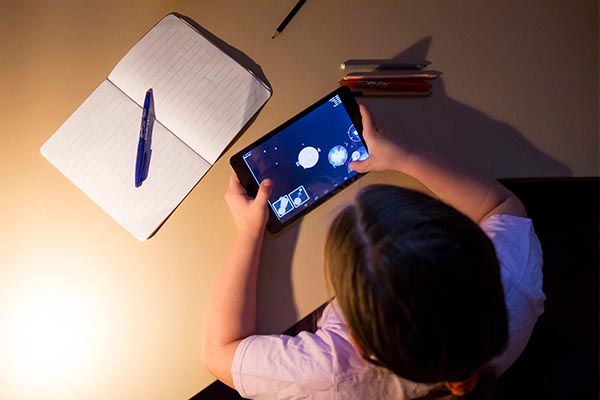
Children's toys: Girl playing tablet game in evening

In the past, organizing a hangout with friends was extremely challenging for young children. Between figuring out a time when everyone was available, deciding on an activity, and transporting everyone there, it was simply too difficult for many kids to hang out regularly without substantial help from their parents. With access to online games, though, children can keep in touch and play with their friends from any distance. Now, organizing a hangout is as simple for your child as checking which of their friends are available, deciding on a game to play, and enjoying hours of fun together, no matter where they are.

Evolving Online Safety Features

Girls looking at tablet on bed

Of course, as a parent, we can’t blame you for being concerned about online safety when your child is enjoying online games and digital toys almost daily. Not too long ago, we were taught not to interact with online strangers at all, but now it seems like those interactions have become a core part of the online experience. So, how can you keep your children safe in this rapidly shifting digital landscape? Fortunately, many device manufacturers, game developers, and even lawmakers have realized the risk that unfettered internet access presents for young children, and have taken steps to mitigate some of the greater dangers.

For example, many countries now require users of digital services like social media and online games to be at least thirteen years old to create an account. Younger children typically need to have their accounts supervised and managed by a parent or guardian, keeping them safe from the many bad actors on the internet. This applies to any game that allows players to interact, chat with, and message strangers. While it’s not a perfect form of protection, it does put up some additional barriers for your child.

Many kids’ devices and online services also have features built-in for younger users that allow parents to track usage time, activity, and the people that their child is interacting with. This makes it easier for parents to keep track of their children’s online activities and nip any potentially risky situations in the bud before they can become a bigger problem.

Of course, the best way to ensure your child’s safety during their online activity time is to simply teach them the basic principles and best practices of internet safety and digital citizenship. We recommend emphasizing a few basic rules:

  • Remember that it’s easy for people to fabricate details about who they are. Just because they say something about themselves doesn’t mean it’s true.
  • Don’t post any language, pictures, or videos that you wouldn’t be comfortable showing to your parents.
  • Remember that once you post something, it’s there forever. Deleting a post doesn’t necessarily get rid of it.
  • Avoid giving out personal information like your name, address, or phone number.

Teaching your child these rules will allow them to safely manage their internet activity. Combined with careful supervision and use of online safety features on devices and games, you can ensure your child will be able to enjoy all the internet has to offer without any of the risk.

Blending Learning and Fun

little girl during online school with tablet

It’s not hard to convince your kiddos to go play video games. Convincing them to go study their essential school skills like arithmetic and grammar, though? That’s a bit of a tougher battle. In the digital age, however, those two things are increasingly becoming one and the same. Rather than force children to sit through boring lessons and worksheets, many education companies are creating entertaining games that teach kids the essential skills they’ll need to succeed in their classes. 

Looking for more great tips, tricks, and products to keep your little ones entertained in the digital age? Come and visit our site at ToysCentral today!


4 Ways for Busy Moms to Enjoy Their “Me-Time”

Let’s face it– parenting is challenging. Yes, it’s one of the most rewarding challenges that many people will ever face, but that doesn’t make it less difficult at the moment. Children, especially toddlers, have around-the-clock needs. As a parent, it’s your responsibility to take care of them whenever they come up. With a toddler taking up so much of your time, though, how are you supposed to find a moment for yourself? Everyone needs “me-time” to rest, relax, and recharge, but as a busy mom, it can feel impossible to get any.

Fortunately for you, that’s not the case. As long as you have a plan, you can take a moment to step out and do all the me-time activities you want. If you’re stuck asking yourself “When does parenting get easier?” we’ve got good news: it can get better right now! Just take a look at our top four tips on how to make time for yourself.

1. Hire a Sitter

If you need an evening to yourself, try hiring a sitter. Babysitters can give you some time to get out of the house without having to worry about your child. They’ll keep the little one entertained, fed, and ensure that they stay on their usual schedule while you can go out, enjoy a date with your significant other. Spend some quality time with your close friends. Just enjoy taking a moment to recharge your batteries. 

When hiring a sitter, we recommend hiring one that’s CPR-certified in case of emergency, and giving them your phone number to contact you if need be. This will give everyone involved a bit of extra peace of mind, allowing you to enjoy your night out to the fullest.

2. Build a Support Web

Father playing with baby and mother having me time

If you can’t afford to hire a sitter, you could also try getting in touch with friends and family. Everyone understands that parenting is a struggle sometimes. They are more than willing to support you if you need it. Over time, you may even be able to develop a system with relatives and fellow moms in your area. For example, once a week, your kids and a friend’s kids have a playdate. One week, you watch all of the kids while your friend goes out for the evening. On the other week, you do the opposite. This allows both of you to enjoy regularly scheduled me-time while ensuring your little ones are taken care of.

3. Cut Out Non-Essential Tasks

While cutting corners is usually seen as a negative thing, it might be just what you need to reclaim some of your free time. The best place to start with this is your chore routine. For example, are you spending all day cleaning the house? While you don’t want to live in a filthy house, there’s no need for it to be squeaky clean all the time.

If you live in a space, especially with a toddler, there’s going to be a certain amount of mess that’s created. There’s nothing embarrassing about that, and learning to cut corners on cleaning can save you a huge amount of time and stress. Does that corner really need to be dusted every day? Do you have to vacuum the entire house every time you clean? Realistically, do you need to clean more than once a week? Cutting out these unnecessary steps and making your peace with just a little bit of dust can have a massive impact on your free time and overall mental health.

4. Find Engaging Activities for Your Child

drawing on notebook

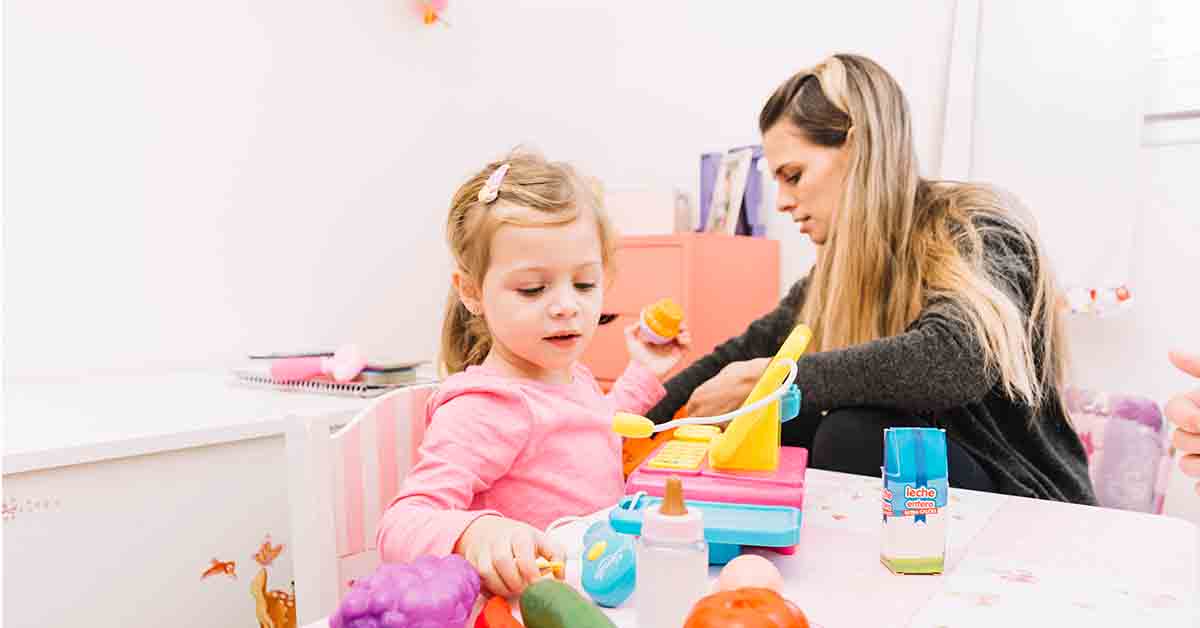
Perhaps the best way to get regular me-time as a toddler mom is by finding engaging activities for your child. Whether that takes the form of fidget toys, picture books, building blocks, drawing or otherwise, find something that captures their attention and keeps them entertained for a long period of time. Whenever you need a bit of me-time, just pull out one of your kiddo’s activities of choice and let them loose! From there, you can take a moment to nap, read a book, or do anything else that will help you relax.

We recommend staying in the general vicinity of your child when doing this, however. While most activities for toddlers carry little to no risk of injury, you don’t want to be far away from home when something bad does happen. Make sure your child is always at least within earshot of a responsible adult. Other than that, though, let your child enjoy their favorite activity, and enjoy an activity of your own!

Looking for more great tips, tricks, and products to give you a bit of time for yourself while engaging your kids? Visit our site at ToysCentral today!

Creative Solo Outdoor Games for Active Kids

As children grow, many of them are interested in activities that help develop their sense of independence and creativity. Outdoor playtime offers a great opportunity for kids to stay active and enjoy their own company at the same time. Whether they’re spending a quiet moment in the backyard or spending an adventurous afternoon in nature, solo outdoor games can be fun and highly beneficial for physical and mental development.

Let’s explore some creative solo outdoor games that keep kids engaged.

Obstacle Course Challenge

Creating an obstacle course is a smart way to get kids up and moving. With a bit of imagination and a few prop items (like chairs, ropes, cones, etc.), kids can create their own courses that test balance, speed, and agility. They can crawl under chairs, climb through hoops, and jump over ropes.

This is not only one of the best one-player games around, but it also encourages problem-solving as kids figure out how to navigate their self-made courses.

By timing themselves, kids can work toward beating their personal best times in order to keep each session interesting. If they want an added twist, they can rearrange the obstacles and create new challenges. 

Treasure Hunt Adventure

Solo Outdoor Games: Boy Scouts spending time in nature

For kids who prefer to explore, a self-directed scavenger hunt is a fun way to spend time outside. With a bit of prep work, kids can develop their own scavenger hunts by creating a list of common natural elements to find while they’re out exploring. For example, they could search for certain types of rocks, flowers, or leaves. If possible, parents may also set up the hunt by hiding things for their children to find.

A treasure hunt is the perfect example of solo activities that effectively combine outdoor exploration with creative thinking.

Solo Frisbee Golf

Frisbee golf, also known as disc golf, is a fun outdoor game that kids can modify for solo play. They can create a course using household items or natural markers like trees and rocks as targets. The goal is to hit the target in as few throws as possible. They can keep track of their score and try to improve with each round.

Frisbee golf is one of those active games for kids that helps improve hand-eye coordination and keeps them moving.

Hula Hoop Challenges

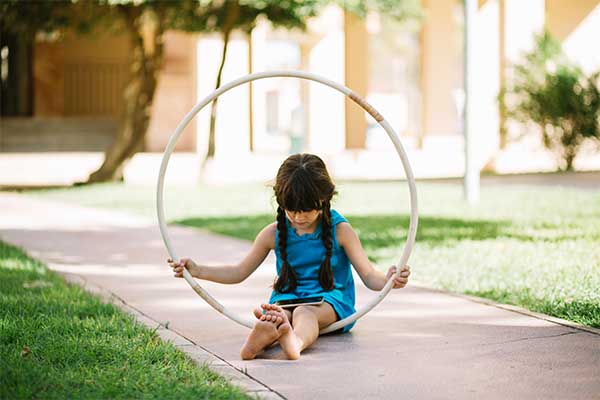
Barefoot girl with hula hoop

Hula hooping is another fun solo game that builds both physical fitness and coordination. Kids can try to see how long they can keep the hula hoop going, or they can challenge themselves to master tricks like spinning it around their arms or ankles. This game is adaptable for any skill level and can be played anywhere with enough space to swing the hoop.

While it’s considered an outdoor activity, hula hooping can be done indoors on rainy days, making it a good option when it comes to indoor games for teenagers

Solo Catch with a Rebound Net

A rebound net is a wise investment for a child who enjoys ball-related games but does not always have a partner available. Throwing a ball into a rebound net bounces it back, which makes it easier to create an interactive solo game. Whether the child uses a soccer ball, tennis ball, or basketball, kids can practice throwing, catching, and kicking without needing another player.

This activity is great for sports lovers and can be both challenging and fun. It’s also a fitting form of play for kids who prefer a more structured game.

Nature Art Creations

For a more relaxed activity, kids can explore their creativity by making nature-themed or nature-sourced art. They can gather items like leaves, rocks, twigs, and flowers to create their own art pieces. Whether they want to arrange pieces into patterns, build sculptures, or make intricate designs on the ground, this type of play enhances creativity while keeping children in touch with nature.

This is one of the best things to do outside alone as it promotes mindfulness but also connects them with the environment. 

Balloon Volleyball

Boy playing solo outdoor games

Kids who like high-energy games can try balloon volleyball. All they need is a balloon and an open space, and they can challenge themselves to keep the balloon off the ground as long as possible. This simple game helps develop reflexes, focus, and hand-eye coordination.

Balloon volleyball is one of the most fun games to play alone because it allows kids to experiment with their timing, balance, and movement.

Solo outdoor games present opportunities for kids to stay active, creative, and engaged. There are countless games to play alone that are not only fun but also promote physical and mental growth. Whether you’re looking for fun games to play by yourself or easy games to play outdoors, these activities will ensure that your child is never bored during solo playtime.

How Limiting Screen Time Can Improve Your Child’s Life

We live in a digital age, and one that’s becoming more and more digital with each passing day. Just thirty years ago, flip phones were considered a luxury. But nowadays, the majority of the global population has what are essentially miniature computers in their pockets at all times. More powerful than the technology that put man on the moon. While this advancement certainly has its benefits, though, studies are coming out that show some definite drawbacks as well, especially among children. Here’s how excessive screen time can harm your child, and why you should consider limiting screen time in your household.

How is Screen Time Harmful?

The answer to this question isn’t exactly simple. The ways in which excessive screen time can harm your child change as they grow and develop. But the one constant is that they’re always present in one form or another. In infancy, screen time can take away from real-world interactions that are instrumental in cognitive development. In childhood, it can keep children from going outside. It leads to increased rates of childhood obesity and sedentary lifestyles. In adolescence, online interactions often replace their real-world counterparts, leaving teens feeling socially isolated and depressed. Simply put, excessive screen time can be harmful to children of any age. Parents should ensure that screens used in moderation, if at all.

Limiting screen time, however, can help your child develop into a well-rounded and socially healthy adult. Finding a healthy limit can be challenging, but the long-term payoff makes it well-worth the effort.

Should I Buy My Child a Phone?

A little girl uses a smartphone while sitting in her room

This is a tough question that doesn’t have a universal answer. In some cases, the convenience and security a smartphone provides will be a great fit for parents and children. In others, the drawbacks of easy access to a smartphone are simply too severe for a phone to be worth it. We recommend having a discussion with other parents in your life, as well as with your child themselves to get a variety of opinions and advice before making your decision.

Ideal Screen Time Limits by Age

Because different ages have different needs, their ideal screen time limits are different as well. Though this is by no means a set-in-stone set of rules, we hope that you can use the guidelines below to piece together a system that works for you and your family.

Infancy (0-2)

Limiting screen time

Though it may seem extreme at first, most pediatric experts recommend not giving infants any screen time at all until they reach 18-24 months of age. This is because in those early years, children are in a very sensitive period of development in which they have to form certain skills or risk falling behind in the long term. Screen time can distract them from the real-world interactions that will teach these key skills, so it’s best to avoid them entirely until their development is less fragile.

Early and Middle Childhood (3-10)

Once your child has left infancy for childhood, you can start easing up on screen time restrictions, but we still recommend being fairly strict. Aim to give your child no more than one hour of screen time a day. Be sure to supervise them whenever they’re using their device to ensure they’re doing so safely and responsibly. In addition, provide them with other activities and toys to play with when they’re not using a device, giving them opportunities to entertain themselves without a screen.

Early Adolescence (11-15)

Boy with tablet on couch

If you’ve decided to buy your child a phone eventually, this is probably the point where you’ll do it. If you do so, we recommend making use of parental control features to restrict screen time to 2-3 hours per day. Also block access to websites that may contain illegal, inappropriate, or explicit material. This ensures that your child can gain all the benefits and conveniences of a smartphone without having their social growth stunted by it.

Late Adolescence (16-18)

By this point, your child has very nearly become an adult, so as hard as it may be for you to do. It’s time to take a step back. You’ve spent nearly two decades preparing them to make their own decisions and learn to care for themselves, so now’s the time to let them spread their wings and fly. Of course, you can still offer the occasional word of advice, but we recommend letting your child set their limits and figure out what works best for them as they transition into adulthood.

If you’re looking for more advice on children and screen time or want some activities for them to do instead of doom-scrolling, visit our site at ToysCentral today for all the ideas and products you need!

Smart Toy Storage Tips to Organize Clutter

Toys are an important part of childhood, but they can make a mess of your living space if they’re not properly managed. Organizing your child’s toy collection is key to keeping your home tidy, and with the right storage solutions, you can transform a chaotic space into one that’s in order. This makes it easier for both you and your child to keep things in their place. 

Let’s go over a few smart toy storage tips that will help you get rid of the clutter and create a space that’s functional and visually appealing at the same time.

Assess Your Space

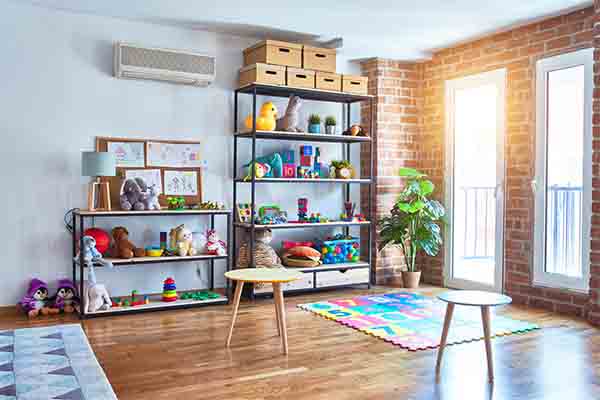
Before diving into toy storage solutions, take a moment to determine the space you have available. Whether you’re working with a dedicated playroom or just a corner of the living room, being aware of your space will make choosing the best toy storage options easier. For example, if you have limited floor space, vertical options like shelving or under-furniture bins can help you use the area to the best of your ability.

Categorize Toys by Type

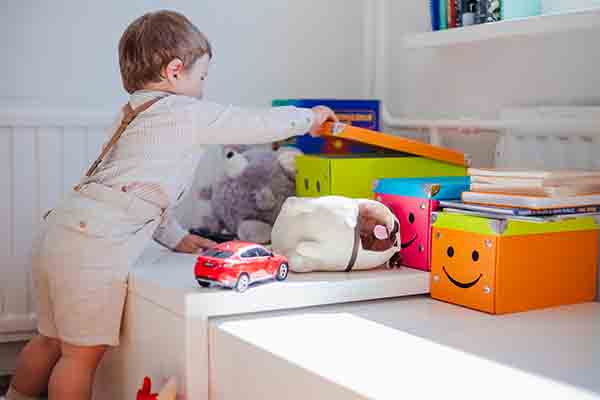
Little boy opening box with toys

One of the most effective toy organization ideas is to categorize toys by type. Group similar items together, such as dolls and action figures, board games, or building blocks. Once categorized, you can dedicate an appropriate bin or container for each group. Label the containers as well, as this will make it easy for your child to understand where everything belongs. This will encourage them to participate in keeping everything organized.

Incorporate Hidden Toy Storage Ideas

If you want to keep a clean and stylish living space without having toys cluttering every surface, hidden toy storage ideas can be a great choice. Try furniture pieces that double as storage units, like ottomans with lids or coffee tables with built-in shelves or cabinets. These options make it easy to tuck your child’s toys away when they aren’t in use, which keeps your living area neat.

Rotate Toys to Reduce Clutter

Sometimes, the clutter problem is brought on by having too many toys at once. Instead of displaying everything, try rotating toys every few weeks. Bringing out a different set of toys every week while storing other sets not only reduces clutter but helps keep kids interested in playing with “new” toys when they come back into rotation. Keep a few toy cars, action figures, or age-appropriate games in one bin, and place building blocks, learning tools, and doll sets in another, for example.

Storage bins come in a variety of sizes, colors, and materials, so they don’t have to be cumbersome, unsightly plastic tubs. For example, woven baskets or wooden crates can help create a rustic look in your home while serving a purpose. Find storage for toys that blend seamlessly with your existing furniture for a cohesive look.

Choose A Few Stylish Storage Bins for Toys

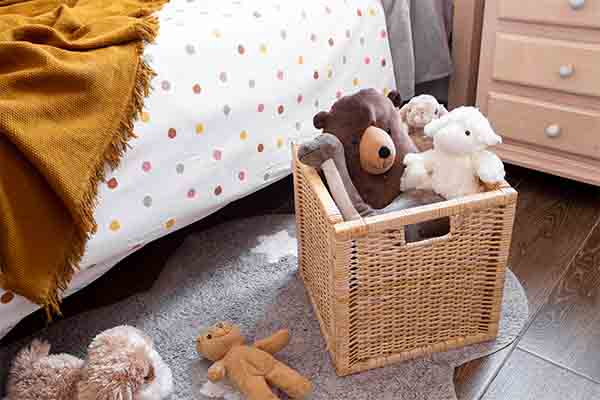
Storage bins for toy storage

Storage bins come in a variety of sizes, colors, and materials, so they don’t have to be cumbersome, unsightly plastic tubs. For example, woven baskets or wooden crates can help create a rustic look in your home while serving a purpose. Find storage for toys that blend seamlessly with your existing furniture for a cohesive look.

Make Use of Vertical Space

As mentioned, when floor space is limited, the only place to go is up. Use wall-mounted shelves, pegboards, or over-the-door organizers to free up your walking space. Vertical storage solutions can take care of everything from books to stuffed toys and they ensure your child’s belongings are accessible without being in the way.

Invest in the Best Toy Storage for Long-Term Use

Investing in high-quality toy storage organizers is a wise decision. This is especially practical if you have multiple children or plan to keep toys for several years. The best toy storage solutions are durable, easy to clean, and versatile enough to grow with your children’s needs. Look for sturdy bins or modular storage units that you can easily rearrange as time passes.

Get Creative with Playroom Storage Ideas

Toy storage room ideas

If you’re lucky enough to have a dedicated playroom, the sky’s the limit when it comes to creative toy storage. You can install floating shelves to display favorite books, hang fabric bins on the wall, or use rolling carts to move your child’s toys around. Try bringing bright, playful colors into your storage solutions to match the energy of the room. 

Demonstrate How to Organize Kids’ Toys

Teaching your children how to organize their toys is a valuable life skill. Make cleanup part of their daily routine by showing them how to sort and store their toys the right way. Use age-appropriate toy storage ideas, such as bins with easy-to-open lids or low shelves that they can reach on their own. Encouraging the habit of cleaning up after playtime helps keep clutter in check and fosters a sense of responsibility in young children.

Organizing toys doesn’t have to be a constant battle. By using a few smart toy storage ideas, you can create a system that works for both you and your children. Whether you decide on hidden storage solutions or more practical toy organizers, there’s a strategy for every home and lifestyle. Explore your options and with a little creativity, you’re sure to design something that works for your home’s unique needs.

10 Ways to Clean and Disinfect Baby Toys

As a parent, keeping your baby’s toys clean is incredibly important in order to maintain their health and safety. Though regular cleaning and disinfecting is crucial, it’s wise to use methods that are effective in killing germs but safe for your little one. Fortunately, you have several options. Let’s go over a few effective ways to clean and disinfect baby toys.

Use Baby-Safe Disinfectant Wipes

One of the most convenient ways to clean a child’s toy is using baby-safe disinfectant wipes. They’re gentle on your baby’s sensitive skin, but they also remove dirt and germs from toys. They work great for quick cleanups after a playdate or a trip to the park.

Hand Wash with Soap and Water

Mom and daughter cleaning the house

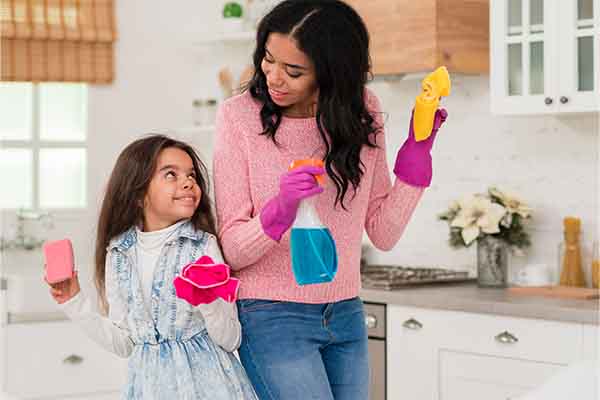
Knowing how to clean baby toys with soap and water is simple but very effective. It’s no wonder why the soap and water method is one of the most trusted ways to kill germs. Use warm water and a mild baby soap to scrub each toy by hand. This method is especially effective if you’re washing plastic and rubber toys. Be sure to rinse them thoroughly and either dry them with a clean towel or let them air dry.

Disinfect Using a Baby-Safe Spray

For a more thorough cleaning, use a baby-safe disinfectant spray on your child’s toys. Spray the solution on the toy’s surface, let it sit for a few minutes to kill bacteria, and then wipe it clean with a cloth. Always check the product’s instructions beforehand to ensure it’s safe for your baby. Usually, you don’t have to rinse away the solution, but there’s generally no harm in a quick rinse if you feel it necessary.

Dishwasher Method

Many plastic toys are dishwasher-safe, but check for a dishwasher-safe icon on each toy to be sure. Avoid washing toys that use batteries or have electronic components to them. To make the process easy, simply place the toys on the top rack and run them through a typical wash. This is a great way to clean toys in bulk, as the heat from the dishwasher will help sanitize them evenly.

A Method for Cleaning Wooden Toys

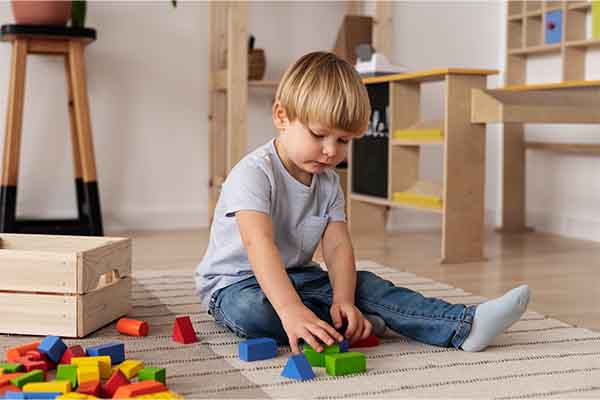
Boy playing with wooden toys

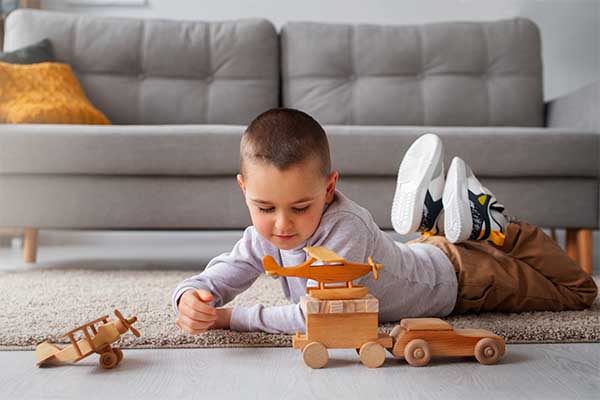
Wondering how to clean wooden toys? Since wood is porous, you’ll want to avoid soaking them in water. Instead, wipe wooden toys down with a damp cloth and a mild soapy solution. Wipe away any moisture or soap residue and let them dry completely. It’s also worth noting that wood tends to absorb chemicals it comes into contact with, so avoid using harsh cleaners to clean wooden baby toys.

Boiling Method

For toys without electronic parts, boiling is an excellent way to sanitize them. Simply immerse the toys in boiling water for 5-10 minutes. This method not only cleans but also disinfects thoroughly, especially for small toys like teethers and pacifiers.

How to Clean Bath Toys

Knowing how to clean bath toys can be tricky due to the water that tends to build up inside them. However, doing nothing can lead to mold growth. To keep your child’s bath toys as clean as possible, squeeze all the water out of them after every bath and allow them to air dry. To clean them, soak each of them in a vinegar-water solution for 10-15 minutes. Rinse them thoroughly, especially if they’re teethers or toys your baby places into their mouth.

Vinegar Solution for Natural Cleaning

Clean and disinfect baby toys

As mentioned, if you prefer a more eco-friendly approach than soaps or detergents, a vinegar solution is a great option. Mix equal parts water and white vinegar to create a gentle yet effective natural cleaning agent. Wipe down toys with this solution, especially those with fewer germ concerns. It’s a safe way to clean and disinfect baby toys naturally.

How to Sanitize Baby Toys with Steam

Steam cleaners are another efficient way to sanitize baby toys without the use of harsh chemicals. A steam cleaner can kill up to 99.9% of bacteria, making it a powerful option for hard surfaces and larger toys. Knowing how to sanitize baby toys this way ensures cleanliness without chemicals, but ensure that each toy is steam-safe before you begin the cleaning process. This way, you can avoid accidentally melting toys made from less durable materials.

UV Light Sanitizers

Toddler playing toys

For high-tech parents, UV light sanitizers are an innovative solution. These devices use ultraviolet light to kill bacteria and viruses without using chemicals. Simply place the toys inside, and in minutes, they’re germ-free. This method is excellent when you’re figuring out how to sanitize toys quickly and easily.

Keeping your baby’s toys clean doesn’t have to be complicated. Whether you wash, disinfect, or sanitize, using the right methods ensures your baby’s health and safety. Each method mentioned above offers peace of mind that your baby’s playthings are germ-free and safe.

Backyard Decor Ideas: Get Crafty and Create Your Own Backyard Fun

Spending time in your backyard is a great way to relax, entertain guests, and enjoy some fresh air. But what if there were ways to take that experience up a notch, for example, by adding a few creative homemade touches? With a bit of imagination and a few simple supplies, you can turn your backyard into a fun-filled sanctuary. If you want to keep your kids entertained, or simply enhance your outdoor space, take a look at these backyard decor ideas that will help inspire your next outdoor project.

DIY Outdoor Games

One of the best ways to add an element of fun to your backyard is by creating a few DIY outdoor games. Not only are these projects relatively fun and enjoyable to make, but they can provide endless entertainment for your family and friends.

A couple of examples of backyard game ideas include:

  • Giant Jenga: Using 2×4 wood planks, you can create a larger version of the classic Jenga game. Cut the wood into uniform pieces, sand them down, and you’re ready to play. You can even paint or stain the pieces to match your outdoor decor. Practice safety when playing this game, though, and avoid stacking the planks too high.
  • Cornhole Boards: If you’re moderately handy with tools, consider making your own cornhole boards. Customize them with your favorite colors and create easy bean bags by stuffing dry beans into an old sock and tying off the end. Then presto, you’ve got a fun yard game that will keep guests entertained for hours.

Craft Your Own Seating and Lounge Areas

Backyard decor ideas

Comfortable seating is a must for any backyard gathering. However, you don’t need to buy expensive outdoor furniture, because it’s possible to create your own. With a few basic materials and a little work, you can build seating that’s both functional and stylish.

Try these backyard decor ideas for quick seating solutions:

  • Pallet Furniture: Wooden pallets are versatile and can be transformed into various types of outdoor furniture. Stack and secure pallets to create benches or use them as a base for outdoor sofas. Add some cushions or pillows, and you’ve got a cozy spot to relax.
  • Outdoor Cushions: If you already have seating but want to give it a refresh, consider making your own outdoor cushions. Choose weather-resistant fabric in patterns or colors that match your style, and sew them over your seat padding. This is a simple project that can dramatically change the look and feel of your outdoor space.

Add Natural Elements to Your Crafts

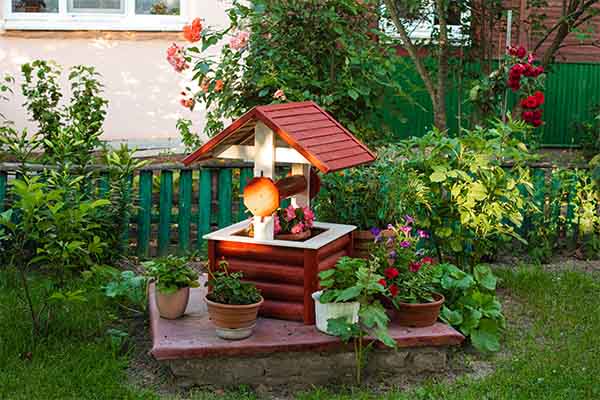
small garden in the backyard. Fake well with potted flowers.

Nature can play a helpful role in your backyard decor ideas. Adding natural elements to your backyard projects not only enhances their aesthetics but also helps you connect with the environment.

  • Stone Pathways: Create a pathway through your yard using flat stones or pavers. You can lay them out in a pattern, or arrange them randomly for a more natural look. This simple project adds a touch of charm to your outdoor space.
  • DIY Bird Feeders: Invite nature into your backyard by crafting your own bird feeders. Use materials like pine cones, peanut butter, and birdseed to make simple feeders that birds will love. Hang them from trees or place them on a stand, and enjoy watching your feathered visitors as they come by for a snack.
  • Flower Pots and Planters: Get creative with your garden area by designing your own planters. Decorate terracotta pots with paint, mosaics, or other embellishments. You can even repurpose old containers or buckets for a rustic look. Fill them with your favorite flowers or herbs, and place them around your yard to add pops of color and fragrance.

Create a Backyard Theater

In addition to your DIY outdoor games for kids, you can also create a media center on your property. Turn your backyard into a movie night gathering spot by crafting your own outdoor theater. This project is surprisingly simple and can be done on a budget.

  • DIY Projector Screen: All you need is a white sheet or a large piece of white fabric and some PVC pipes to create a frame. Create the frame, then stretch the fabric tight across it. Secure it in place and you’ve got an instant projector screen.
  • Snack Station: No movie night is complete without snacks. Set up a DIY concession stand with snacks of your choice, such as popcorn, candy, and drinks.

Build a DIY Water Feature

Water fountain in backyard

A water feature can add a soothing ambiance to your backyard, and you don’t need a professional to install one. With a little creativity, you can create your own fountain or pond.

  • DIY Fountain: You can make a simple water fountain using a large ceramic pot, a small water pump, and some decorative stones. Place the pump in the pot, cover it with stones, and fill the pot with water. The gentle sound of running water will help create a peaceful atmosphere.

A fountain not only enhances the look of your backyard, but it may also attract birds and other wildlife, which will make your outdoor space even more enjoyable if you like nature-watching.

Creating your own backyard fun combines creativity, craftsmanship, and outdoor enjoyment. Whether you’re making DIY games, building a luxury backyard playground, creating custom furniture, or adding smaller touches, these DIY projects will take your outdoor space to the next level.

What is Gentle Parenting? Best Parenting Tips for You

Gentle parenting is an approach to raising children that focuses on empathy, respect, and understanding. Unlike more traditional, authoritarian parenting styles that come with strict rules and punishment, gentle parenting aims to create a nurturing and supportive environment for children. The goal is to raise young people who feel confident, have emotional intelligence, and are able to form healthy relationships.

Here’s a closer look at what gentle parenting entails and some practical tips for implementing it.

What is Gentle Parenting?

Gentle parenting

Gentle parenting begins with attempting to understand your child’s feelings and needs. It involves actively listening to what your child has to say and validating their emotions. It encourages parents to see situations from their child’s perspective and respond with compassion. 

In addition, respect plays a key role in gentle parenting methods. This means treating children as individuals with their own thoughts and feelings, rather than as an extension of the parent. Gentle parents aim to foster mutual respect and understanding in their parental relationships, instead of just demanding obedience.

Gentle parenting is not without rules, though, contrary to the stereotypes surrounding it. This parenting style simply moves away from punishment and instead uses positive discipline. This involves teaching young people about the consequences of their actions in a supportive way, such as helping them learn from their mistakes without fear or shame.

Finally, building a strong, legitimate bond with your child is a must in gentle parenting. Gentle parents aim to spend quality time with their children, engaging in activities that strengthen familial relationships and create safe, secure attachments.

Gentle Parenting Tips

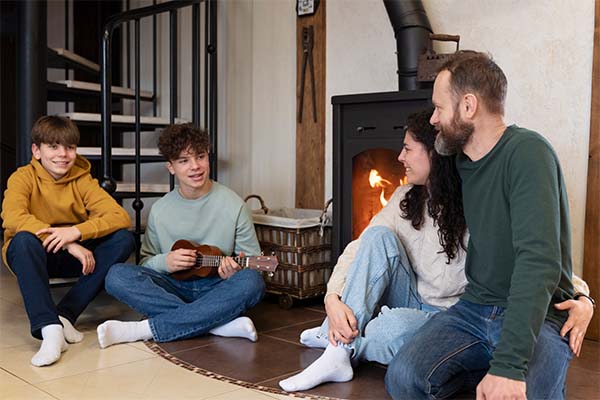
Family enjoying together

Many people wonder, “Does gentle parenting work,” and the answer is quite simple. Yes, gentle parenting works when implemented correctly. Gentle parenting techniques are all about finding balance, such as the balance between establishing rules and respecting a child’s autonomy. Gentle parents want to actually teach their children how to become happy, healthy adults, but part of that goal does not involve making the child feel afraid of disobeying or disagreeing with their parents. 

If you’d like to explore it, here are a few tips to follow.

Practice Active Listening

Take time out of your day to listen to your child. Show that you understand how they feel by reflecting on what they’ve told you. For example, if your child is upset because a friend ignored them in favor of other friends, you might say, “I see that you’re feeling pretty low because your friend ditched you. That must be tough.”

Set Clear and Consistent Boundaries

Children need boundaries to feel safe and secure, just like adults do. However, in gentle parenting, these boundaries are set with empathy and explained clearly. Instead of simply saying, “Stop doing that because I said so,” you might offer a more reasonable statement, something like, “It’s not safe to climb up on the kitchen countertop. Go get a stool if you want something out of the cabinet.”

Use Positive Reinforcement

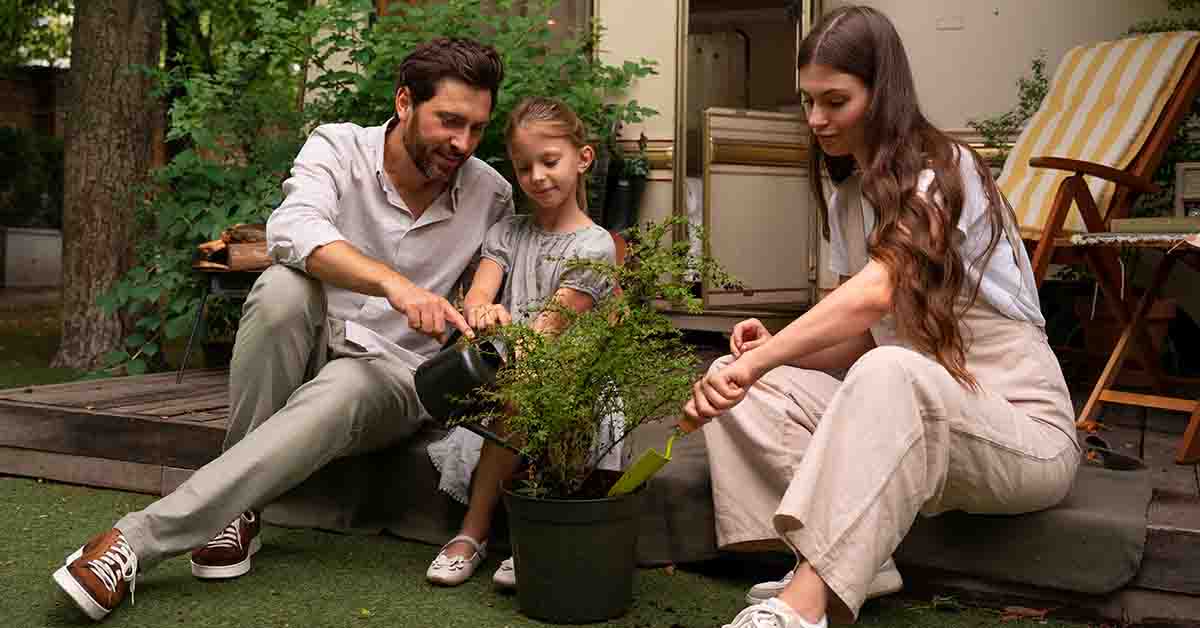
Gentle parenting: child spending time with parents

Gentle parenting discipline is perhaps one of the most misunderstood concepts of the style. Gentle parents do not just let their children run amok and do whatever they want. However, gentle parenting does focus on rewarding good behavior above punishing bad behavior. Praise and encouragement can go a long way in reinforcing positive actions. For instance, when your child shares something of theirs with a sibling, even though they don’t have to, gentle parents acknowledge that kindness.

Model the Behavior You Want to See

Children learn by observing their parents, and gentle parents do not believe in the “Do as I say, not as I do,” style of leadership. Instead, try demonstrating the behavior you want to see in your child. If you want your child to speak kindly to others, be a good example and do the same. One of the many benefits of gentle parenting is that it encourages parents to live up to their own expectations.

Allow Natural Consequences

Instead of rushing to fix every problem for your child, allow them to experience the natural consequences of their actions when safe to do so. This helps them understand the impact of their choices. For example, if they refuse to wear a coat on a chilly day, they’ll learn to dress warmly next time when they feel cold.

Stay Calm and Patient

Parenting can be challenging, but staying calm and patient is crucial. When you feel yourself getting frustrated, take a moment to breathe and collect your thoughts before responding. This helps you maintain a gentle and composed approach, even in difficult situations. There is very rarely a need to yell in order to get your point across, which is something gentle parents focus on.

Gentle parenting is about building a strong, respectful, and empathetic relationship with your child. By following these tips, you can create a nurturing environment that promotes your child’s emotional and social development. For more, check out gentle parenting books and resources to help you along your journey.

Family Activities With Your Kids for Their Development

When raising children, few things are more important than making sure they know that they’re a loved and treasured member of the family. With everyone and everything being so busy nowadays, though, it can be difficult to make time to do that. We believe, however, that carving time out of your schedule for family bonding time is one of the best things you can do for your child’s development. What do you do once you’ve carved out that time, though? Here are a few of our favorite family fun day ideas and relationship bonding activities to try with your little ones.

Family Activities at Home

Even when you carve out time to spend with your family, you don’t always have the time or money to have a day out on the town, and we completely understand that! Fortunately, family bonding time can happen anywhere, so we’ve put together a few great family bonding activities that you can enjoy from the comfort of your own home.

Read Stories Together

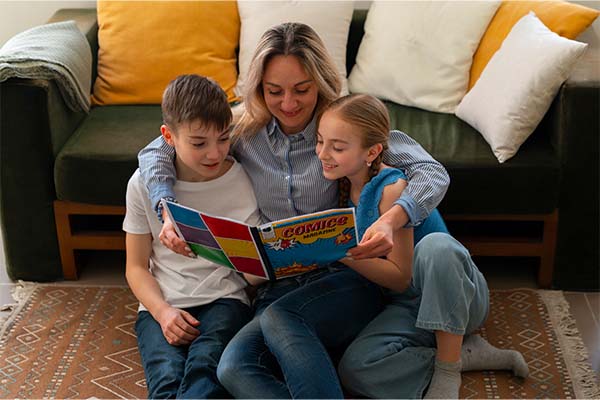
woman and kids reading comics

You likely already read stories to your children every night before bed, but why wait until the evening? Any time is a good time for a story, and children are sure to love the novelty of an afternoon story time. Prepare some of their favorite snacks, pick out some of their favorite stories, and get reading! You’ll get some bonus points and giggles if you do a dramatic reading, complete with voices and embellished hand motions. Don’t worry about being a great actor or orator; all that matters is that you’re present and building memories with your children.

Have a Board Game Night

Board game nights are a great family tradition to start early on, as they can be continued well into your kids’ adult lives. Try setting aside one or two nights a week to just chat and play board games together for a few hours. To prevent any debate about what games should be played that night, give one family member the power to choose the game, and allow a different member to pick each week.

If you have younger children, we recommend starting with simple games like Sorry or Candyland. As they grow more accustomed to board games, though, you can move onto more complex and challenging options like Settlers of Catan. If you really want to go the extra mile for your family game nights, you could even try running a long-term Dungeons & Dragons campaign!

Family Outing Ideas

Family enjoying outings

It’s good to get out of the house every once in a while, so when you do go out, why not take the whole family with you? Family outings are a great way to expose your children to new and exciting experiences that’ll broaden their perspectives and teach them about the world they live in. Here are a few of our favorite family outing ideas.

Visit a Museum

Museums are another great ageless family outing activity. Because there’s a museum for just about every topic under the sun, you can always find a museum that both you and your kids will find interesting and engaging.

Want to teach your kids about complex concepts like physics in a simple way that they can actually understand? Try a local science museum! Want to teach them about what lies beyond our planet and how we discovered it? A space museum will do the trick. Just look around your area and see what museums are within a reasonable distance and you’re sure to find something that’ll make a perfect family outing.

Go on a Hike

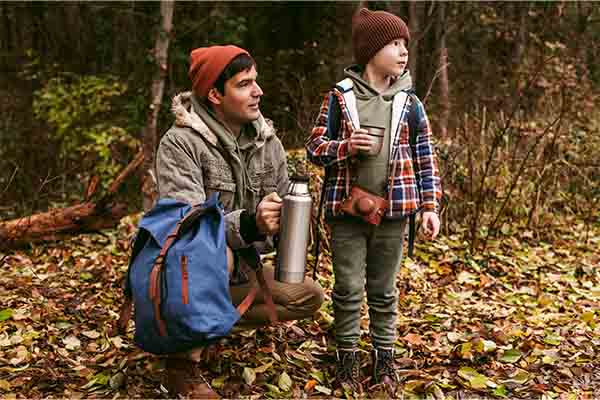
Father and son enjoying nature outdoors

If you think your children would benefit from a bit of extra time in the great outdoors, try taking them on a hike for your next family outing! It’s a great way to see some wildlife that they may not have seen otherwise, learn more about the world around them, and most importantly, disconnect from screens, the internet, and social media for a few hours.

Before setting out on a hike, though, ensure that you’ve taken the proper safety measures. Remember that your children likely aren’t used to hiking, so you’ll need to ease them into it. Try to find a relatively flat trail that isn’t too long to keep them from getting exhausted on difficult terrain. 

In addition, pack everything you’ll need to keep you and your kids happy and healthy throughout the hike. Everyone will need sunscreen, bug spray, plenty of water, and some snacks in case anyone gets hungry mid-hike. As long as you’ve picked a good trail and packed accordingly, though, your whole family is in for a fun and exciting adventure out in nature!

Looking for more great tips, tricks, and products to help bring your family closer together? Feel free to visit our site at ToysCentral today!
How Does Developing Hobbies Help a Child’s Development?

As your child grows and develops, they’ll learn new things, find new interests, and acquire new skills. Eventually, these factors meld together and allow your child to discover their hobbies. These hobbies may be a lifelong passion or a passing whim, but either way, they can help your child learn a lot about the world and aid them in their development. Here’s how hobbies can help your child, how you can encourage them to find hobbies, and some of the best hobbies for kids of all ages.

Learning Through Play

Before children learn to speak, read, write, or even walk, they learn about the world around them through play. Early on in life, everything is a new and exciting experience, and there are lessons to be learned everywhere your child looks. 

Once they’ve learned enough about the world through play in general, they’ll be able to start finding hobbies. These hobbies allow them to focus on and learn about a very specific topic, teaching them discipline, patience, and commitment to their goals. Whether the hobby in question ends up being long-term, it’ll teach your child invaluable lessons that they can use for the rest of their lives.

Best Hobbies for Toddlers

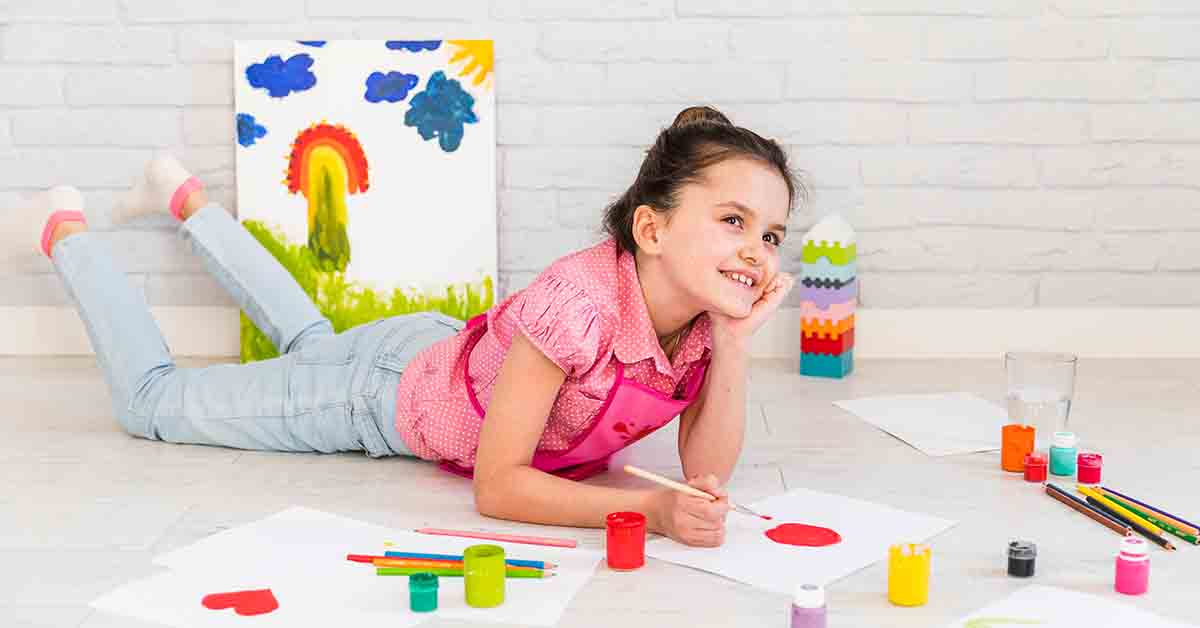
girl painting with gouache at wooden table

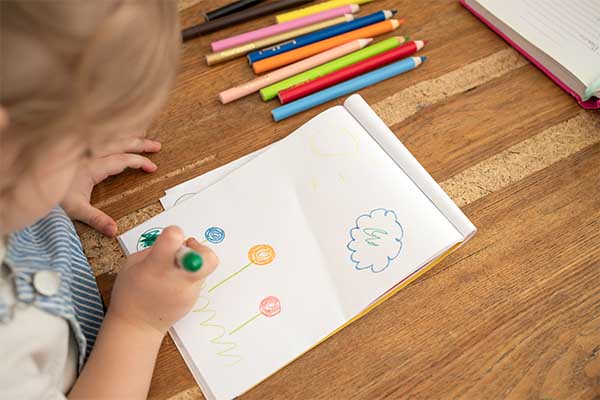
As a toddler, your child will start forming simple, general hobbies. Typically, these hobbies will take the form of a favorite playtime activity like coloring, building block sculptures, or acting out stories with their favorite toys.

However, this is a point in most children’s lives when they’re still just starting to develop their interests, so your little one likely hasn’t settled on anything yet. To ensure they have the resources they need to explore and discover new hobbies, we recommend providing them with a variety of toys and activities to try. Once they’ve found a few favorites, you can start focusing your toy purchases more heavily on their fields of interest. For now, we recommend picking up some hobby basics like:

Best Hobbies for Kids 5-12

young boy practicing tennis

At this stage in your child’s development, they’ll have a much better idea of what they enjoy doing, and will be able to zero in on a hobby or two to specialize in. However, they’re still in a sort of mercurial stage, so we recommend waiting until a strong interest develops to buy highly specialized equipment and supplies. If you make a huge upfront investment and your child’s interest suddenly changes, it could lead to frustration on both sides. 

To start, we recommend purchasing some entry-level basics for your child’s new hobby. Go for something that’s good enough for them to use while figuring out what their hobby entails, but doesn’t break the bank. If your child persists with the hobby in question, you can start upgrading their equipment to nicer, longer-lasting tools that can do more for them. This will motivate your child to continue improving in their hobbies and talents, creating something that can carry over to their teen years and adulthood.

Some common hobbies for kids 5-12 are more advanced art forms, physical activities like sports, reading, and writing or storytelling, so have a conversation with your child to figure out what they’re most interested in!

Good Hobbies for Teens and Young Adults

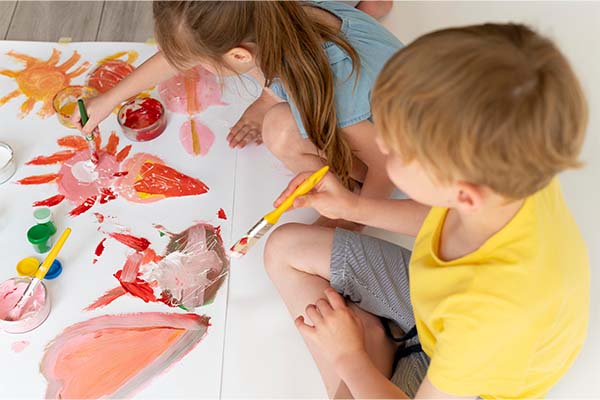
Boy and girl doing painting by developing hobbies

By the time your child has grown into a teen, they have a much more concrete idea of their likes, dislikes, and interests, which makes it far easier for them to settle on a hobby. Chances are, their old childhood hobbies have carried over into this stage of life and have taken on a new, more specialized form. 

For example, a child who was interested in art may grow up to be a teen who is interested in drawing and painting specific things like lifelike figures, cartoons, or manga. By this point, more advanced equipment is a strong investment, as your teen is much more likely to stick with their hobbies now that said hobbies are firmly established. 

Some such hobbies may include writing long-form stories and essays, advanced art forms like sculpting and music, and much higher-level sports than they would have played before. As with your younger children, sit down and have a conversation with your teen about what their hobbies are and what they need to excel in those hobbies. Then, use this information to make an informed decision within your budget.

Looking for more great tips, tricks, and products to help your children through every stage of their development? Feel free to visit our site at ToysCentral today!