

Helping children develop their speech and language skills early can set them up to master effective communication for life. Toys play a major role in this process, as they present children with engaging ways to interact, build their vocabulary, and recognize unique sounds. Let’s explore the top speech & language development toys. We’ll focus on items that stimulate creativity, communication, and reaching developmental milestones.
“Pretend Play” Toys for Imaginative Conversations
Pretend play toys, like play kitchens, doctor kits, and toy phones allow children to mimic real-life scenarios. These toys provide opportunities for children to role-play, narrate their actions, and describe their surroundings, which helps in developing essential language abilities. Encouraging children to explain their actions while playing with speech therapy toys or other imaginative options helps build storytelling skills.
Building Blocks and Stacking Toys for Vocabulary Expansion
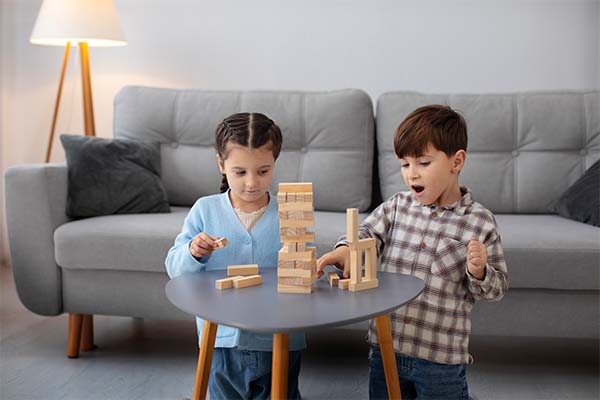
Classic building blocks or stacking toys not only offer children versatile play, but they’re also ideal for toddler language development. Parents can introduce words like “tall,” “short,” “up,” and “down” during playtime, which helps toddlers connect vocabulary words to visual and physical concepts. Asking questions like, “What color is this block?” or giving prompts like, “Let’s build a tall tower,” encourages responsive communication.
Musical Toys for Sound and Word Recognition
Musical instruments, like xylophones or toy drums, can boost a child’s auditory skills and introduce them to rhythm and sound patterns. Singing along to musical toys or repeating the lyrics to songs is an excellent way to teach language through repetition. These types of developmental toys are especially effective for helping children identify and imitate the sounds they hear, which is a crucial step in learning to talk.
Puzzle and Matching Games
Puzzles that feature animals, letters, or shapes offer opportunities to practice naming and categorizing objects. For example, a puzzle with animals encourages toddlers to identify each one and make the corresponding sounds, like “moo” for a cow or “raar” for a lion. Toys for speech therapy like these help toddlers learn how to associate words with objects and concepts.
Storytelling and Picture Books with Interactive Features
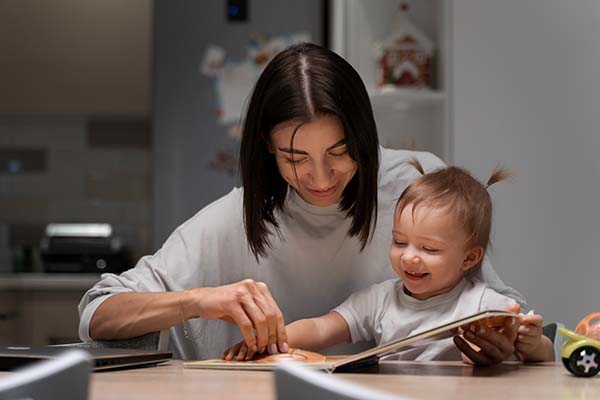
Interactive books, like those with flaps to lift or textures to touch, are perfect for engaging toddlers in storytelling activities. While books aren’t technically toys, they are some of the best learning tools for toddlers when used interactively. For example, parents can encourage toddlers to point to images and repeat the names of characters, objects, or actions.
Toy Animals and Figurines for Roleplay
Small figurines, like farm animals or action figures, allow children to imagine their own scenarios and practice their conversational skills. The best toys for preschoolers encourage storytelling, problem-solving, and the use of action-oriented language, such as “The cow is eating grass” or other phrases that narrate the activity taking place in the child’s imagination.
Activity Boards for Sensory and Verbal Interaction
Activity boards with buttons, levers, or zippers use sensory stimulation as an opportunity to teach language. Parents can encourage toddlers to describe their actions, such as, “Push the button,” or “Flick the switch up.” These activities help cement action words and positional vocabulary.
Playsets for Group Interaction
Sets like toy tea parties or train tracks encourage group play, which also promotes conversational turn-taking and better listening skills. These scenarios, in which young children play together, also teach the importance of cooperation, sharing, and valuing each member of a group.
Toys That Teach Cause and Effect
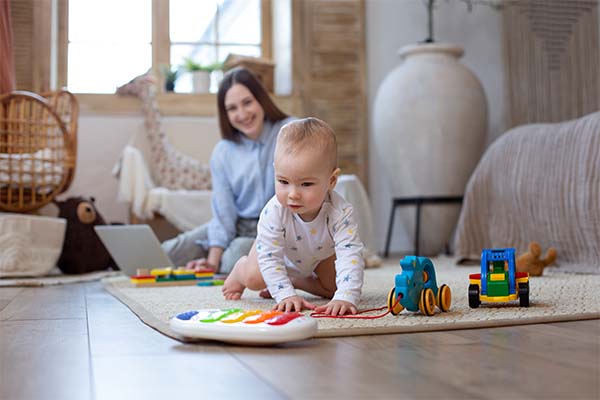
Toys with lights, sounds, or moving parts triggered by specific actions are perfect for teaching cause and effect. For instance, a toy that plays music when a button is pressed encourages toddlers to use language to describe what happens. These are among the top toys for toddlers because they combine fun with cognitive and verbal skill development.
Art Supplies for Expressive Language
Creative tools like crayons, markers, or playdough offer a fun way for children to express themselves. Parents can use this time to introduce descriptive language by asking questions like, “What color is the sun you drew?” Art-based play is a natural way to teach descriptive words and expand a child’s vocabulary.
The Role of Toys in Language Development
Toys are more than just fun, they are an important part of helping children develop language, cognitive, and social skills. Choosing items that encourage interaction, creativity, and problem-solving can help toddlers learn new words and practice their communication skills in an enjoyable way.
Whether you’re searching for the best toys for toddler boys or you’d just like to enhance your child’s learning through speech therapy toys, the key lies in picking versatile and engaging toys that spark curiosity. With the right tools and techniques, parents and caregivers can create a playful environment that encourages children to both have fun and learn new things.